 |
| "Darkness is cheap, and Scrooge liked it" Ebenezer Scrooge begins Charles Dicken's "A Christmas Carol" with a lifelong obsession with hoarding money. |
"Money is a terrible master, but an excellent servant".
A person wants to look good- this is natural and not unreasonable. Like it or not, our physical appearance is the first impression we give to the world. It's a signal of how much we value ourselves, as one of God's creations. However, a person can easily cross the line of a reasonable desire for an attractive appearance- they can spend an excessive amount on clothes, make-up, or cosmetic surgery. In which case, they have taken an innocent, practically harmless instinct, and allowed it to become far more of a priority than it was ever meant to be.
A person may have righteous indignation towards, say, a politician. To feel this way whenever you witness injustice, abuse or exploitation is not only an admirable thing- it is the RIGHT thing. But if their anger is not kept in check, the seed can grow into fruitless attacks, and violence.
A person enjoys their rest time. We are commanded, in fact, to take rest time (Exodus 20:8-11); it's a necessary opportunity to recharge your emotions, reflect, and pray for strength to continue forwards. It's also a time to engage with friends and family casually, and to take pleasure in the life we've been given. But if a person wants to rest and relax too frequently, and to an exorbitant degree, then they are labelled a sloth, a layabout, lazy.
There are more examples. But in each of the paragraphs above, you can see how they began innocently enough; they began with good intentions. But because they remained unchecked, sin eventually was allowed to take over, and corrupt even good intentions.
So what is the lesson here? Firstly, I think it's important to remember to keep a watchful eye on the things we allow to become parts of our personality, and to be very aware of when a seed is growing into something it was never meant to be. Proverbs 4:19 states:
"The way of the wicked is like darkness; they do not know what makes them stumble".
Let us, therefore, not become blind to the influences within that, without frequent reflection, may well become corrupted.
Secondly, as is so often the case with Christianity, a path of moderation is what's necessary. But to follow that path, we need "self-control". And what is that? We often think of "self-control" merely as the discipline of avoiding doing something; "I'm NOT going over-spend on my credit card". "I'm NOT going to say anything to her about it- it's not my place". But let us also recognise that, to DO the right thing in the right moment is also a form of self-control. "I'm going to help this person who needs my money more than I do right now". "I'm going to tactfully say something to her, before this situation escalates". Quite literally, you are able to control yourself, whether it be taking a step back, or taking a step forwards. Again, in Proverbs, we see:
"He who is slow to anger is better than the mighty, and he who rules his spirit than he who takes a city" - Proverbs 16:32
In addition, Proverbs clearly advocates a moderated lifestyle as one to be aimed for. In the following passage, the author (traditionally assumed to be Solomon) prays for a life where he is neither too poor, nor too rich:
"Give me neither poverty nor riches- feed me with the food allotted to me; lest I be full and deny You, and say, "Who is the Lord?", or lest I be poor and steal, and profane the name of my God" -Proverbs 30:8-9
So save money, but don't hoard it. Look good, but don't idolise yourself. Be angry at the right time, but don't let it bring you to destruction. Rest, but remember that rest is a reward for hard work. Visit friends, but know that your alone time is important, too. Strive for peace, but be prepared for war.
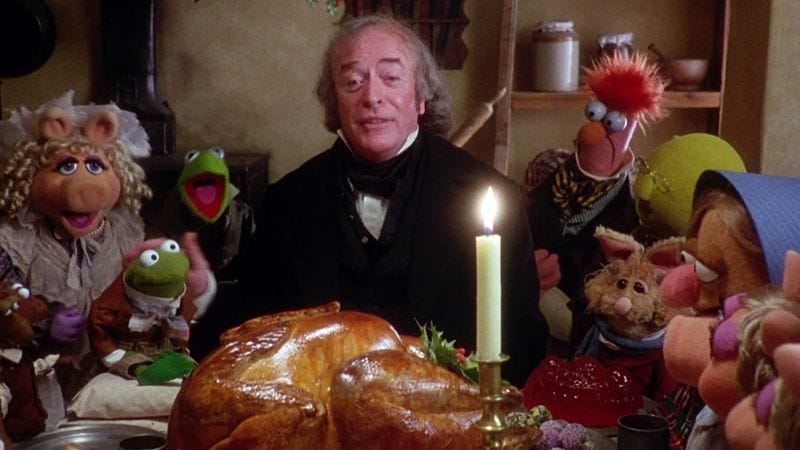 |
| "I will honour Christmas in my heart, and try to keep it all the year!" Scrooge finally recognises that his talents are tools that must not be buried in the ground. |
This is a hard path to tread- to take the first point as an example; we are required to walk between spending all our money as soon as we get it, and being a tightfisted miser who never spends any money, even when he has saved enough. It can be a hard balance to find, but as usual the answer to success lies in prayer, meditation on the word of God, strength and unity with the support of the church, and a personal desire to imitate Christ in all circumstances.
